
From Pixel Perfect to Prompt Perfect: The Human Touch in AI Design
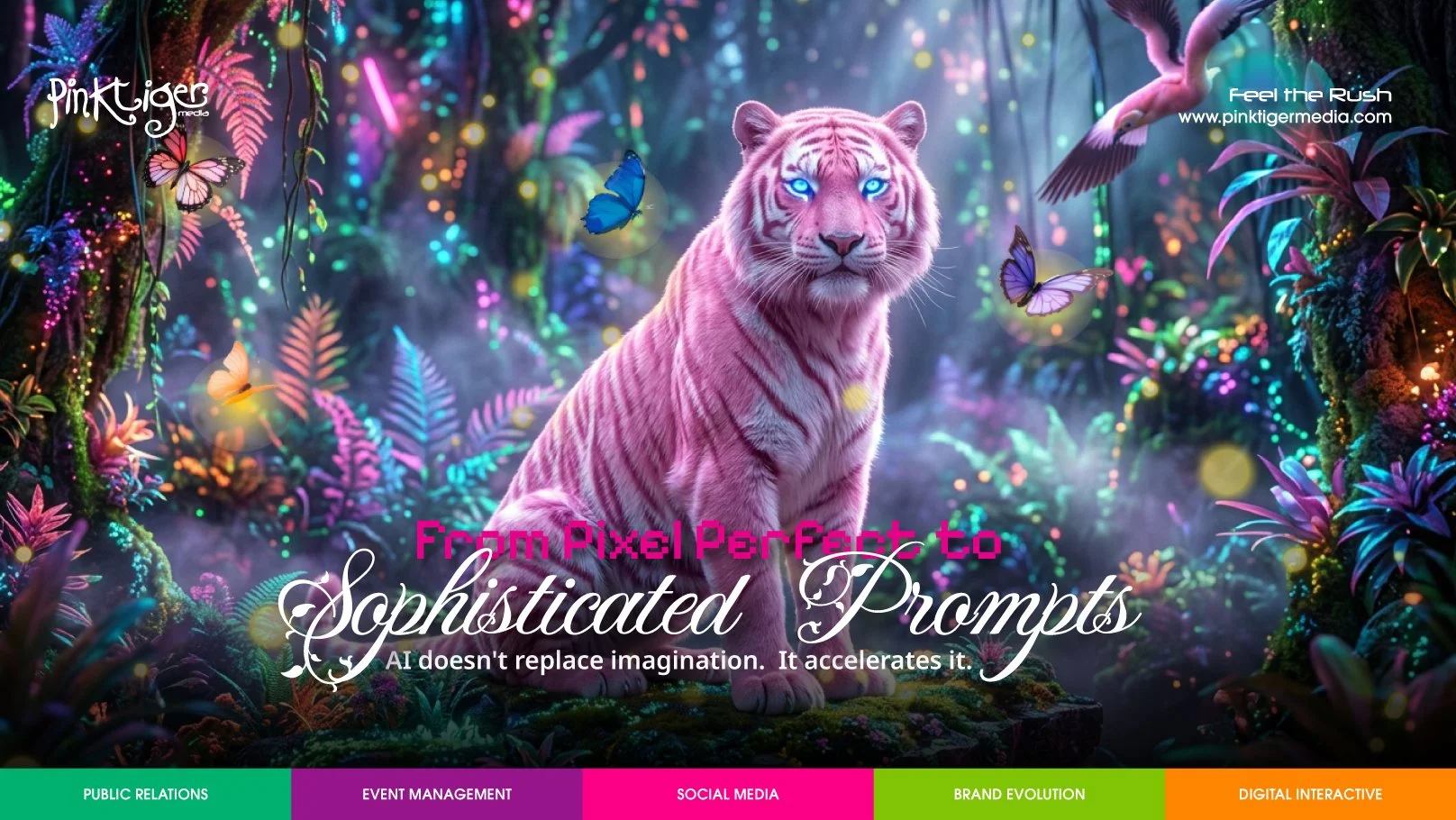
We are living in remarkable times, an era shaped by astonishing technology that would have seemed unimaginable and absurd just a decade ago.
Back then, every image, graphic, and every logo had to be meticulously constructed, often pixel by pixel. Each design carried a distinct soul, brought to life through a graphic designer’s personal interpretation of an abstract idea. It was never an easy process; every detail demanded precision and intention. While challenging, the journey was deeply rewarding especially when you understood the craft and witnessed your work come to fruition.
In recent years, however, the rapid advancement of technology has transformed this process in ways that feel almost miraculous. With the emergence of AI, creating a graphic from start to finish can now be reduced to a single sentence prompt and a few seconds of waiting. In an instant and voilà - you’re presented with a finished image, often alongside multiple variations to choose from. Had you told a graphic designer in the early 2020s that this would become reality, they might have scoffed and laughed it off. After all, great design once required time, effort, and a mastery of skill. Today, anyone with internet access can step into the role of a designer with the assistance of AI.
This is not a critique of AI-generated art, but rather an exploration of what it brings to the table. Instead of viewing AI as a shortcut for mass-producing visuals, it is worth considering a different perspective. AI does not “steal” creative jobs, nor does it confine creators to a rigid style. Rather, it has the potential to elevate the creative process by acting as a collaborator or creative partner that helps generate ideas and refine outcomes. Importantly, AI does not function independently; it relies on human input and is shaped by the data and limitations it operates within, particularly when producing highly detailed or nuanced artwork.
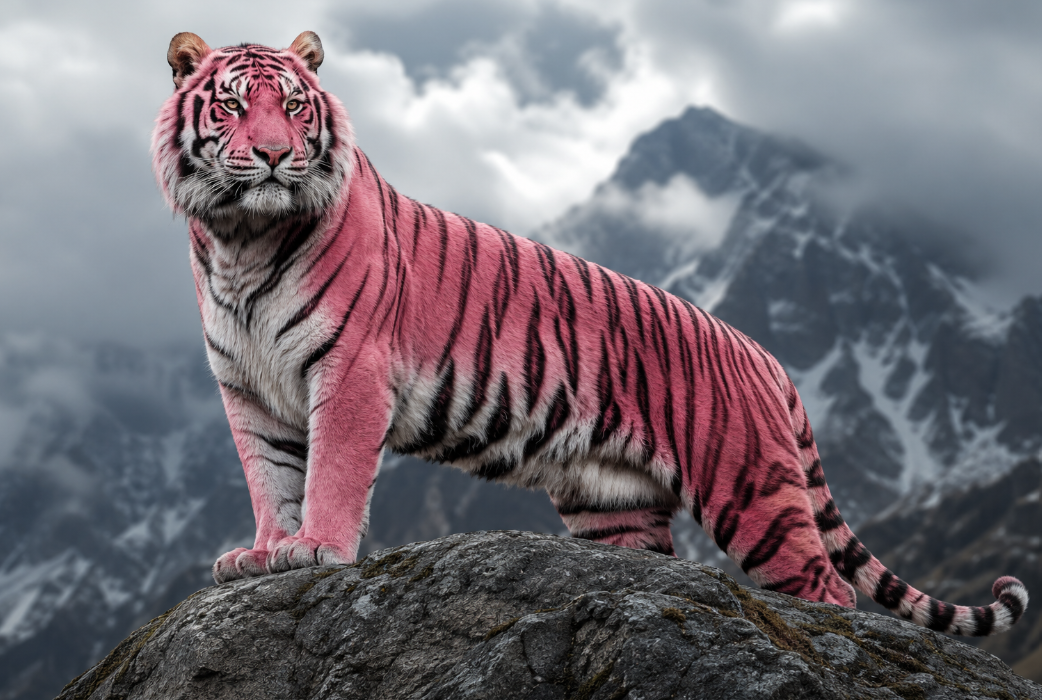
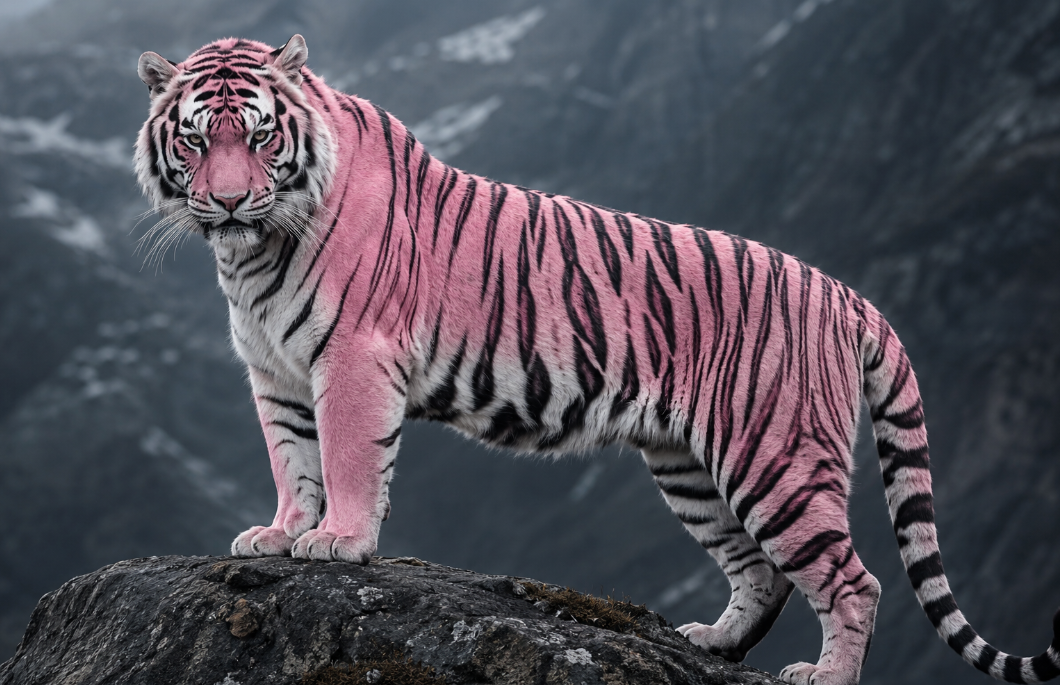
For instance, generating a fully AI-created image of a tiger requires more than a vague idea, it demands carefully constructed prompts with specific parameters. These prompts guide the AI in interpreting and translating the concept into a visual result. In this example, we use ChatGPT to generate a tiger image, though it is worth noting that outputs may vary across different AI platforms. Consider the following prompt: “A striking, ultra-realistic tiger with its signature black stripes, but with pink replacing the orange; side-posed and perched on a large rock, exuding a fierce and intimidating presence while maintaining a sense of splendour and dignity.” From this single description, the AI can produce a range of images that feel both familiar and distnctively reimagined, demonstrating the power and flexibility of this evolving creative tool.
What’s particularly fascinating is how this process mirrors, in a condensed form, the traditional design workflow. Ideation, refinement, variation, and execution are still present, only now they occur at an accelerated pace. This creates new opportunities not just for efficiency but for creative exploration. Designers can test multiple concepts in a fraction of the time, explore unconventional ideas without significant resource investment and push the boundaries of visual storytelling further than before.
Taking it a step further, this dynamic between AI and human input extends beyond creative industries into high-stakes sectors such as financial services. Here, limited legal frameworks and the real consequences of error underscore a critical truth; while AI can process vast amounts of data, it cannot fully replace human integrity and judgment. As AI pioneer and founder Donald Michie noted, “Expert knowledge is intuitive; it is not necessarily accessible to the expert himself.” In complex, high-risk environments, human intuition and accountability remain indispensable - reinforcing that AI, no matter how advanced, is ultimately a tool rather than a decision-maker.
Ultimately, the rise of AI in graphic design is not about replacing creativity, but redefining how it is expressed. It challenges long-standing notions of authorship and effort, while simultaneously expanding the possibilities of what can be created. The tools may have changed, but the core of design remains the same; the ability to communicate an idea, evoke emotion and bring imagination into reality.
Thinking of giving your brand the graphics it deserves?
Contact Pink Tiger Media, we’re here to make that possible.